

22aud casino Plinko game
Introduction
I have reviewed a lot of casino content over the years, and one pattern repeats itself: the simplest-looking 22aud Casino games page often create the strongest reactions. That is exactly the case with 22aud casino Plinko. At first glance, it seems almost too basic to hold attention for long. A ball drops from the top of a board, bounces off pegs, and lands in a prize slot with a multiplier. No reels, no paylines, no bonus rounds in the traditional sense. Yet in practice, Plinko can be one of the most tension-heavy formats on a modern casino platform.
What makes it stand out is not visual complexity but the way it compresses suspense into a few seconds. Each drop is short, easy to follow, and immediately resolved. For many players in Australia, that direct rhythm is part of the appeal. You do not spend time decoding symbols or waiting for a feature to trigger. You choose a stake, set a risk level, release the ball, and see the result almost instantly. To understand the wagering rules behind each offer, open best 22aud Casino chicken road next.
This article is focused strictly on the Plinko page experience at 22aud casino. I am not treating it as a broad casino review. Instead, I want to explain what Plinko actually offers, how its logic works, where the real risks sit, and what kind of player is likely to enjoy it. The game looks simple, but the player experience can change dramatically depending on settings such as rows and risk level. That gap between visual simplicity and actual session volatility is the most important thing to understand before playing.
What Plinko is and why it draws so much attention
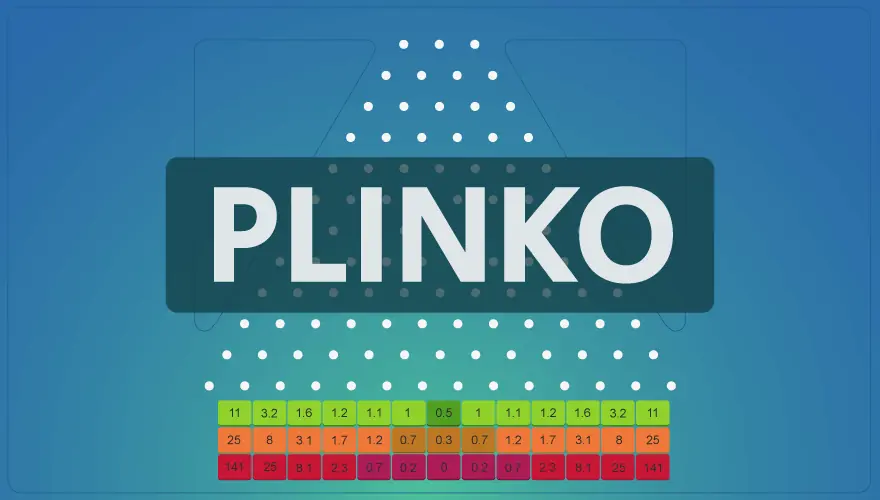
Plinko is a chance-based casino game built around a vertical board filled with pins. The player drops a ball from the top, and as it hits the pins on the way down, it deflects left or right until it lands in one of several slots at the bottom. Each slot carries a multiplier. The final multiplier determines the return on that drop.
The concept is easy to grasp within seconds, which is one reason the format has become so noticeable across online gambling platforms. A new player does not need to learn paylines, symbol values, side bets, card strategy, or table etiquette. The visual logic is immediate. You can literally watch randomness unfold in front of you. For a closer look at the games library, withdrawal times overview sorts the titles by theme and pace.
That clarity matters. Many casino games hide their mathematics behind layers of presentation. Plinko does the opposite. It presents randomness openly, almost theatrically. The ball bounces in a visible path, and that creates a strong psychological effect: players feel involved in the journey even though the outcome is still determined by probability.
One of the most interesting things about Plinko is that it often feels more “honest” than a slot, even though it is not more predictable in any meaningful sense. You see the ball move. You see near-misses at the edge multipliers. You see clusters of low returns. That transparency makes the game easier to trust visually, but it should not be confused with control.
At 22aud casino, the appeal of Plinko is tied to this exact combination: low entry complexity, fast rounds, and a visible result path that keeps every drop emotionally readable. Players are not just waiting for numbers; they are watching the randomness play out in real time.
How the Plinko system actually works in a real session
To understand whether Plinko is worth trying, it helps to break the format into its practical parts. The basic structure is simple, but the session behaviour depends heavily on a few adjustable settings.
- Stake size — the amount placed on each drop.
- Risk level — usually low, medium, or high, affecting multiplier distribution.
- Rows — the number of peg rows the ball travels through, which can shape outcome spread.
- Drop result — the multiplier reached at the bottom.
When I evaluate Plinko, I pay closest attention to the relationship between risk level and payout distribution. That is where the real character of the game sits.
On lower-risk settings, the bottom slots tend to be structured more tightly. The extreme multipliers are smaller, but more outcomes cluster around modest returns. In plain terms, the session often feels steadier. You will still lose plenty of drops, but the experience is less jagged.
On higher-risk settings, the distribution becomes more aggressive. The central slots may return very little, while rare edge results can carry much larger multipliers. This changes the emotional profile of the game immediately. A high-risk Plinko session can produce long stretches of disappointing results followed by one hit that reshapes the whole balance.
The rows setting also matters more than many players expect. More rows generally mean a longer path, a broader spread of possible landing positions, and a slightly different pacing of suspense. Fewer rows make outcomes resolve faster and can make the board feel more compact. More rows stretch the anticipation by a second or two, but that is enough to alter the mood of the session.
| Core Setting | What It Changes | What It Means for the Player |
|---|---|---|
| Stake | Value of each drop | Directly controls bankroll pressure and session length |
| Risk level | Multiplier distribution | Changes whether results feel smoother or more extreme |
| Rows | Path length and outcome spread | Affects pacing, visual tension, and result distribution |
| Auto-play or repeated drops | Session speed | Can accelerate losses if used carelessly |
A useful observation here is that Plinko is not really one fixed experience. The same interface can behave like a low-intensity drip game or like a highly swingy multiplier chase depending on the chosen setup. That is why two players can describe the same Plinko title in completely different terms and both be right.
Why the game feels engaging even though the rules are minimal
Plinko creates interest through rhythm, not through layered content. There are no expanding wilds, story themes, or long 22aud Casino bonus page with bonus terms and account details ladders carrying the session. Instead, the attraction comes from repeated micro-events. Every drop is its own miniature suspense cycle: release, bounce pattern, near-miss tension, final slot.
That short loop is powerful because it resets quickly. A slot spin can feel passive if nothing meaningful happens for several rounds. Plinko rarely feels passive. Even when the return is poor, the player has watched a distinct path and experienced a brief rise in tension. The result may be mathematically ordinary, but it does not feel visually empty.
I think this is one reason Plinko remains so noticeable in modern online casinos. It turns randomness into a visible performance. The board does not just produce an outcome; it stages it.
There is another factor that deserves attention: near-edge drama. In Plinko, the biggest multipliers often sit at the far edges, and the ball can appear to flirt with them before dropping into a much lower slot. That creates a strong emotional reaction. From a probability standpoint, nothing unusual has happened. From a player’s perspective, it feels like the game showed a glimpse of a major hit and took it away at the last second.
This is one of the most memorable aspects of the format, and it can be both entertaining and dangerous. Entertaining, because it keeps the session alive. Dangerous, because near-misses can encourage players to overestimate how “close” they are to a big result. In reality, each drop remains independent.
At 22 aud casino, or any similar platform offering Plinko, the practical takeaway is simple: the game is engaging because it is fast, visual, and emotionally compressed. Not because it gives the player any hidden edge.
Risk levels, probabilities, and what players often misunderstand
If there is one area where players most often misread Plinko, it is probability. The game looks transparent, but that does not make it easy to interpret correctly.
The first thing to understand is that a visible path does not equal meaningful predictability. Watching the ball bounce left and right can create the illusion that the result was “almost” different in a way that matters strategically. It was not. The path is part of the presentation of randomness, not a cue for a reliable betting pattern.
The second point is that high multipliers are usually rare for a reason. If a Plinko board advertises large potential returns, those outcomes are generally placed where the probability of landing is very low. The trade-off is not subtle. Bigger upside usually means a harsher distribution across the rest of the board.
This is where session expectations become important. A player who enters Plinko expecting regular medium returns may be comfortable on low risk and frustrated on high risk. A player who specifically wants the chance of a standout multiplier may accept long dry stretches as part of the deal. Neither approach is wrong, but the mismatch between expectation and setting is where disappointment starts.
I would reduce the practical probability lesson to three points:
- Large multipliers are not frequent events. They are the exception that defines the volatility.
- Changing risk level changes the shape of outcomes, not the existence of randomness.
- Short-term patterns are not strategy signals. A sequence of low returns does not mean a big hit is due.
That final point matters more than many players admit. Plinko’s speed can tempt people into reactive decision-making. After ten weak drops, it is easy to increase the stake and justify it emotionally. But the game does not owe the player a correction. The next drop is simply the next drop.
How risky Plinko really is and who it tends to suit
Plinko can be relatively mild or sharply aggressive depending on configuration, but as a format, it should never be treated as low-pressure by default. The reason is not just multiplier spread. It is also the pace. Fast resolution means more decisions in less time, and more decisions usually mean faster bankroll movement.
In practical terms, Plinko tends to suit players who enjoy:
- short, repeatable rounds;
- clear visual feedback;
- simple controls with meaningful risk settings;
- sessions built around momentum rather than long feature cycles.
It may be less suitable for players who prefer:
- narrative slot design and bonus rounds;
- games with strategic input, such as blackjack;
- slower decision-making;
- more stable entertainment value from each individual round.
One of the clearest truths about Plinko is that it can feel relaxing at the interface level and stressful at the bankroll level. The screen is clean. The action is easy to follow. The rules are light. But if the player chooses a high-risk setup and lets the drops run quickly, the session can turn expensive faster than expected.
That contrast is worth remembering. Calm presentation does not necessarily mean calm variance.
What the pace of Plinko means for a real-money session
When I assess casino games, I always look beyond the rules and ask a more practical question: what does a 10-minute session actually feel like? With Plinko, the answer depends heavily on discipline.
A manually played session with moderate stakes can feel controlled and surprisingly readable. You drop, observe, pause, and decide whether to continue. In that form, Plinko can be a compact and entertaining format.
The experience changes once the player speeds it up. Repeated fast drops reduce reflection time. Losses blur together. Small returns can create the impression of constant activity without necessarily preserving balance. This is where Plinko becomes more demanding than it first appears.
I have seen players underestimate this because the game does not look intense in the same way a fast slot or live table might. But the pressure is there. It is just packaged cleanly.
A practical way to think about Plinko session rhythm is this:
| Session Style | Typical Feel | Main Concern |
|---|---|---|
| Low risk + manual drops | Measured, steady, easy to follow | Can become repetitive for thrill-seekers |
| High risk + manual drops | Tense, dramatic, emotionally sharp | Long weak stretches can test discipline |
| Any risk + rapid repeated drops | Fast, absorbing, easy to overrun budget | Reduced control over bankroll decisions |
One memorable thing about Plinko is that a session can feel eventful even when the balance says otherwise. The board gives constant motion, constant feedback, constant little moments of hope. That makes it entertaining, but it also means players should judge the session by results and limits, not by how “active” it feels.
How Plinko differs from slots and other casino games
Plinko is often grouped loosely with casino mini-games, but that label does not fully explain its identity. It sits in an unusual position between pure visual simplicity and high emotional engagement.
Compared with classic slots, the biggest difference is structural. Slots are built around reels, symbol combinations, and feature triggers. Their suspense often depends on what might happen after the spin starts: a scatter lands, a wild expands, a bonus round opens. Plinko has no such layered reveal. Its suspense is concentrated into a visible descent and a final landing point.
Compared with roulette, Plinko shares the appeal of immediate resolution and chance-driven outcomes, but the emotional presentation is different. Roulette is abstract and numeric. Plinko is kinetic. You watch the path. That adds a sense of narrative to an outcome that is still random.
Compared with blackjack or poker-based formats, Plinko offers almost no strategic depth. That is not a flaw in itself. It simply means the entertainment comes from risk selection and outcome observation, not decision mastery.
Here is the practical difference in plain terms:
- Slots reward players who enjoy layered features and thematic variety.
- Roulette suits players who like clean probability frameworks and table-style betting.
- Blackjack appeals to those who want decisions to matter.
- Plinko works best for players who want fast visual suspense with minimal learning curve.
That is why 22aud casino Plinko should not be judged by slot standards alone. It is not trying to deliver a long-form feature experience. It is trying to deliver short bursts of suspense with adjustable intensity.
Where Plinko performs well and where it shows limits
No casino format is ideal for everyone, and Plinko is a good example of a game with very clear strengths and equally clear boundaries.
Its strongest side is accessibility. A player can understand the basic loop almost instantly. That lowers friction and makes the game easy to test in a short session.
Its second strength is adjustable session character. Risk settings and board depth can materially change how the experience feels. That gives the player more control over style than many people expect from such a simple layout.
Its third strength is visual immediacy. The path of the ball gives each round a visible identity. This may sound minor, but it is one reason Plinko avoids the dead-spin feeling that can affect slot sessions. Those comparing loyalty perks can weigh this section against 22aud Casino withdrawal guide before requesting a cashout.
Now the limitations.
The game can become repetitive. If a player needs progression, unlockable depth, or varied bonus structures, Plinko may start to feel narrow after a while.
It can also encourage impulsive pacing. Because each round is quick and easy to process, it is dangerously simple to play faster than intended.
Finally, the simplicity can be deceptive. Some players assume a straightforward interface means a straightforward bankroll profile. That is not always true, especially on higher-risk settings.
In other words, Plinko is strong when judged on what it is actually designed to do. It is weaker when players expect it to behave like a feature-rich slot or a strategy-led table game.
What to check before launching Plinko at 22aud casino
Before starting a Plinko session, I would recommend focusing on a few practical points rather than jumping in based on appearance alone.
- Check the risk setting first. Do not treat this as a cosmetic option. It changes the whole session profile.
- Set a stake that matches session speed. A comfortable slot stake may feel too high in a fast-drop Plinko session.
- Look at the multiplier layout. The board itself tells you a lot about how harsh or forgiving the distribution may be.
- Decide whether you want manual control or rapid repetition. This choice affects budget discipline as much as entertainment style.
- Use demo mode if available. It helps reveal how different settings actually feel before real-money play begins.
This is also the point where I would add an observation many generic reviews skip: in Plinko, the most important decision often happens before the first drop, not during the session. Once the ball is falling, there is nothing to influence. Your real control is in setup, stake discipline, and pace.
That is why players should spend a minute understanding the board instead of assuming the game will explain itself fully through play. It explains the visuals quickly. It does not explain bankroll behaviour nearly as clearly.
Final verdict on 22aud casino Plinko
22aud casino Plinko offers a very specific kind of casino experience: fast, visual, low-friction, and capable of feeling far more intense than its clean interface suggests. Its core strength is not complexity. It is the way it turns a simple drop into a compact suspense event. The full picture of payment methods lives in 22aud Casino Gates of Olympus slot tips, including the less common ones.
For the right player, that is a real advantage. Plinko works well for people who want immediate results, clear presentation, and the ability to shift between steadier and more aggressive session styles through risk settings. It can be engaging in short bursts, easy to understand, and surprisingly effective at holding attention.
But the game also demands caution. The visible path of the ball can create a false sense of interpretability. The fast rhythm can accelerate bankroll loss. High-risk modes can produce long disappointing stretches that test patience and discipline. None of that makes Plinko a bad option. It simply means the format should be approached with accurate expectations.
If you want layered features, deep strategy, or long-form slot progression, Plinko may feel too narrow. If you want direct action, transparent presentation, and adjustable volatility in a compact format, it makes much more sense.
My honest conclusion is this: Plinko is not just a simple casino diversion. It is a tightly designed probability game that uses visibility and pace to create tension. That is why some players keep coming back to it, and why others bounce off it quickly. It does one thing very clearly. The key is knowing whether that one thing matches the way you actually like to play.
FAQ
How does Plinko work when the ball drops?
A ball is released from the top and falls through the board, bouncing into numbered slots. Each slot corresponds to a multiplier that applies to the selected stake.
What should be checked before the first real-money Plinko launch?
Confirm the bet size shown for real-money play and review the risk level indicator on the game screen. If a welcome offer is available on the account, note whether it affects the stake or session rules before starting.
Is a demo mode available for Plinko, and does it follow the same rules?
Demo mode supports the same Plinko mechanics: ball drops, slot outcomes, and multipliers. It is designed for practice so no real-money balance is involved.
If multipliers look different between sessions, what detail should be confirmed?
The active multiplier mapping stays within the specific Plinko game configuration, but the displayed outcome depends on the exact slot the ball lands in. Bet size and selected mode influence the overall result even when the board layout feels similar.
What does the volatility or risk level mean on a Plinko game screen?
Volatility reflects how results may vary from one drop to the next. A higher risk level typically means bigger swings in multipliers rather than small, steady outcomes.
When Plinko is launched from the lobby, how are demo mode and real-money play distinguished?
The lobby shows separate access for demo mode versus real-money play. Selecting the correct mode before the ball drop is important, because results affect balances only in real-money mode.
How is Plinko different from a live casino table like roulette on the same official site?
Plinko is a single-player style game where the ball drops and multipliers are determined by game mechanics. Live roulette involves a dealer and real-time table actions, so the pace and feel of the session are different.
How do players choose the right entry for Plinko on the official site?
Start by selecting demo mode for practice or real-money play for balance-based sessions. Then choose a stake that fits the displayed limits and launch the first ball drop using the in-game controls.